
We have built an intelligent meeting system for enterprise meetings, course training, and cross-language interviews in Canada and English-speaking regions, consisting of portable recording hardware, a mobile app, and an AI content engine. It doesn't just save audio; it goes further to complete speech-to-text transcription, multilingual translation, speaker identification, key point extraction, and meeting minutes, turning a recording directly into searchable, shareable, and collaborative content assets.
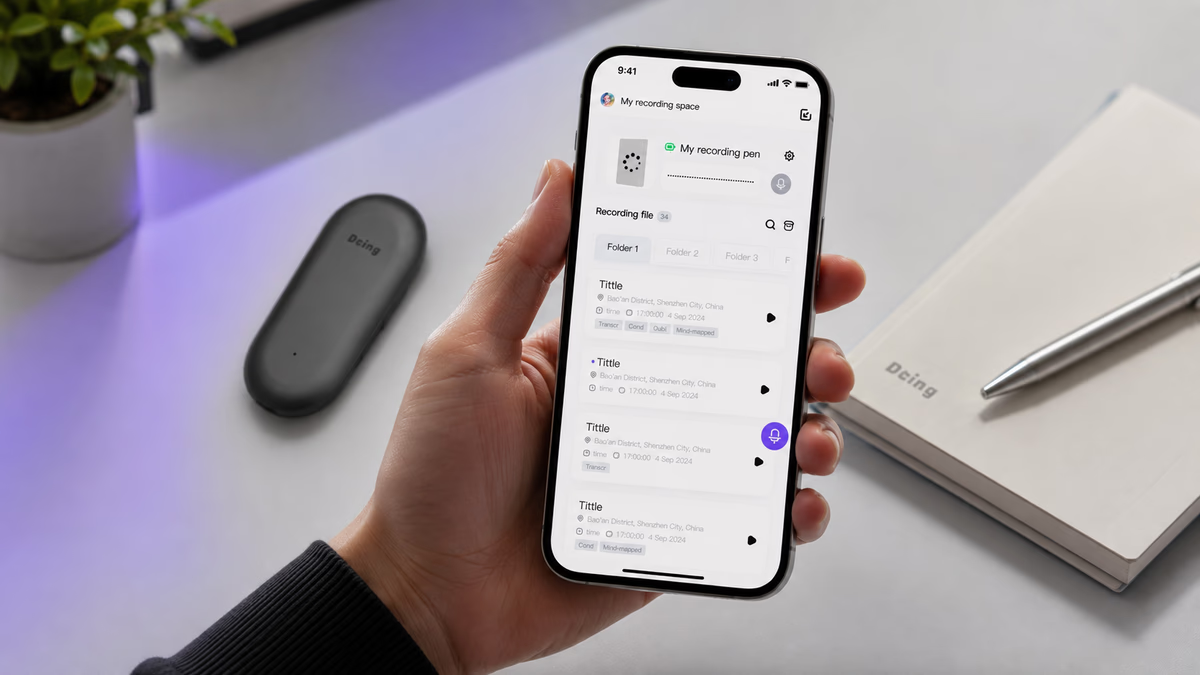
From 'Recording' to 'Getting Answers'
When we first approached this project, we saw a very real problem: traditional recording devices can already handle basic capture, but the work of organizing training sessions, interviews, and internal discussions still relies heavily on manual effort. Repeatedly listening back, manually marking, organizing key points, and outputting files—the truly time-consuming parts all happen after the recording.
So we didn't define the project as 'making another recording device.' Instead, we focused on the post-meeting outcomes and re-examined the complete chain of 'capture—understand—organize—output.' What users really need is not an audio file, but conclusions and materials that can directly move into the next step of work.
Slim Hardware, Complex Acoustics, and AI Processing Must Work Together
Portable devices impose strict limitations on size, battery life, and microphone array design, but real meetings involve distant speakers, overlapping voices, ambient noise, and mixed Chinese-English conversations. If the front-end capture deviates, the quality of subsequent transcription, translation, and summarization will be amplified.
At the same time, this is a product that needs to adapt to the usage habits of organizations in Canada and English-speaking regions. Recording consent, user privacy, account permissions, file sharing, and data storage boundaries cannot be patched after launch; they must be designed into the product flow from the very beginning.
Rebuilding the Software-Hardware Loop Around Results
We started with the capture end, improving sound quality in complex environments through multi-microphone pickup, intelligent noise reduction, and device status management. Then we integrated recording, transcription, translation, summarization, and meeting minutes into a single workflow, minimizing the need for users to switch between multiple tools.
On the implementation side, we built recording consent, file permissions, account isolation, content deletion, and sharing scope into the product interaction, allowing different regions and organizations to configure according to their own requirements, rather than using a fixed set of rules for all scenarios.
In terms of business model, we position hardware as a high-frequency entry point, while AI transcription, translation, cloud storage, and advanced minutes capabilities support ongoing subscriptions, creating long-term value through 'device sales + software services.'
This is the real problem we solved in this project: users don't lack recording tools; they lack the ability to quickly turn recordings into work outcomes.
Technology is not the goal — exponential business growth is.