
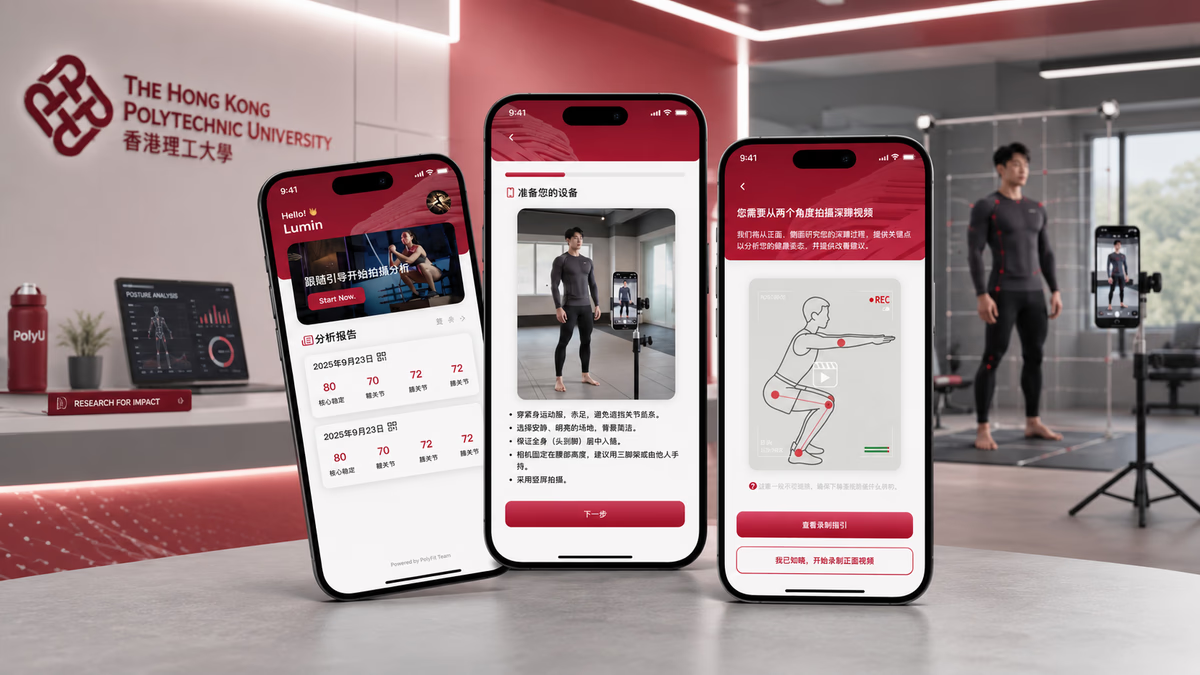
We collaborated with Hong Kong Polytechnic University to productize their human pose analysis research, building a mobile platform that enables motion capture, pose keypoint recognition, issue identification, and visual recommendations through phone videos. Users don't need professional equipment; they can follow guided instructions to complete recording and receive easier-to-understand pose assessment results.
Bringing lab-level analysis capabilities to everyday phones
Traditional human pose analysis relies on professional equipment, fixed venues, and manual assessment, making it difficult to cover home training, fitness coaching, and large-scale screening. Research algorithms can recognize movements, but there's a whole productization gap between that and actual use by ordinary users.
We didn't just integrate the algorithm into an app and call it done. Instead, we focused on whether users can capture properly, understand the results, and know what to do next.
Non-standard environments directly affect AI judgment
Shooting distance, angle, lighting, clothing, and movement range all affect recognition stability. If the algorithm only outputs a score, users struggle to understand where the problem lies or how to improve.
Pose videos and human data are also health-sensitive, so the product must control data collection scope and clearly define the boundary between exercise assessment and medical diagnosis.
Embedding complex algorithms behind clear, actionable user flows
We use step-by-step motion guidance to help users standardize shooting distance, angle, and movement process. After recognition, we present specific issues and improvement directions by body part and movement dimension, making algorithm results understandable to non-professional users.
For data handling, we control the collection and usage scope of personal videos, allow users to manage and delete content, and clearly state in the product that this is an exercise pose assessment tool, not a medical diagnostic system.
In terms of application scenarios, this capability can serve individual assessment and training, as well as extend to professional analysis needs of fitness institutions, coaches, and research units.
What we solve is the productization problem: 'the algorithm can already recognize movements, but ordinary users still don't know how to use it or understand the results.'
Technology is not the goal — exponential business growth is.