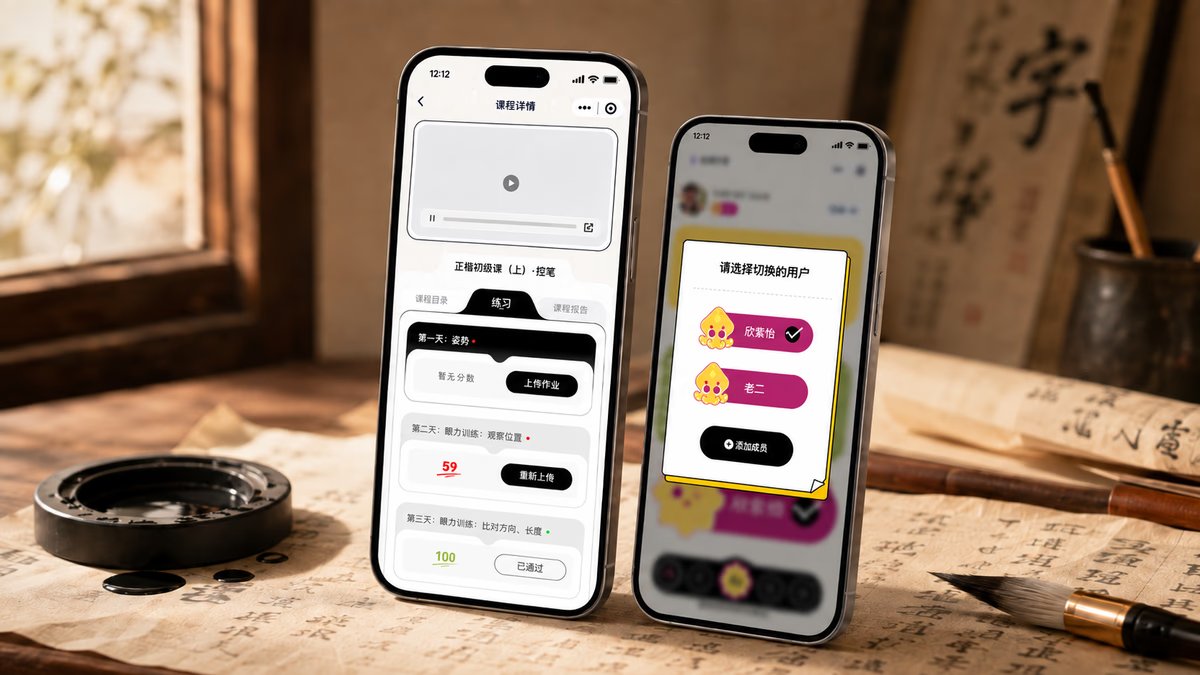
We have turned a structured writing training methodology into an AI teaching capability that can be used consistently in home and training settings. Users access relevant content through textbook or course portals, complete exercises, and upload photos. The system then provides scores, pinpoints specific issues, and recommends targeted exercises for further improvement.
What handwriting practice truly lacks is immediate feedback after writing
Printed textbooks and demonstration courses can provide reference model characters, but they cannot determine where each student actually goes wrong; it is also difficult for teachers to complete one-on-one corrections promptly after every practice session. Many users know that "this character doesn't look good," but they don't know whether the problem lies in structure, proportion, strokes, or spatial relationships.
So we didn't make the project a simple course player; instead, we connected textbooks, video courses, and AI assessment together, so that every practice receives feedback and naturally leads into the next training session.
AI scoring has true teaching value only when it can explain itself
Differences in lighting, shooting angles, paper, and handwriting can all affect recognition results. The system must not only assess the quality of the writing but also explain the issues according to established training dimensions, rather than simply providing an unsupported score.
The product targets students and parents, and involves minors' accounts, student work data, and course copyrights. Recognition effectiveness, data boundaries, and protection of original content must all be integrated into the product design.
Turn feedback into a clearer practice task for next time
We let users go directly from the textbook or course entry point to the corresponding content, reducing the cost of content discovery; after a work is uploaded, the system provides scoring, problem identification, and targeted practice suggestions based on specific writing dimensions, so that feedback can truly guide the next practice session.
At the data and copyright level, we control the scope of student data collection, set guardian permissions, and manage copyright for the curriculum, training methods, and content assets, preventing teaching assets from losing protection after digitalization.
In terms of the business model, textbook sales serve as the user entry point, while AI assessment, course services, and personalized learning plans generate recurring revenue.
What we solve is the most common confusion in calligraphy learning: users know the standard answer, but they never know why they can't write well or what to practice next.
Technology is not the goal — exponential business growth is.