
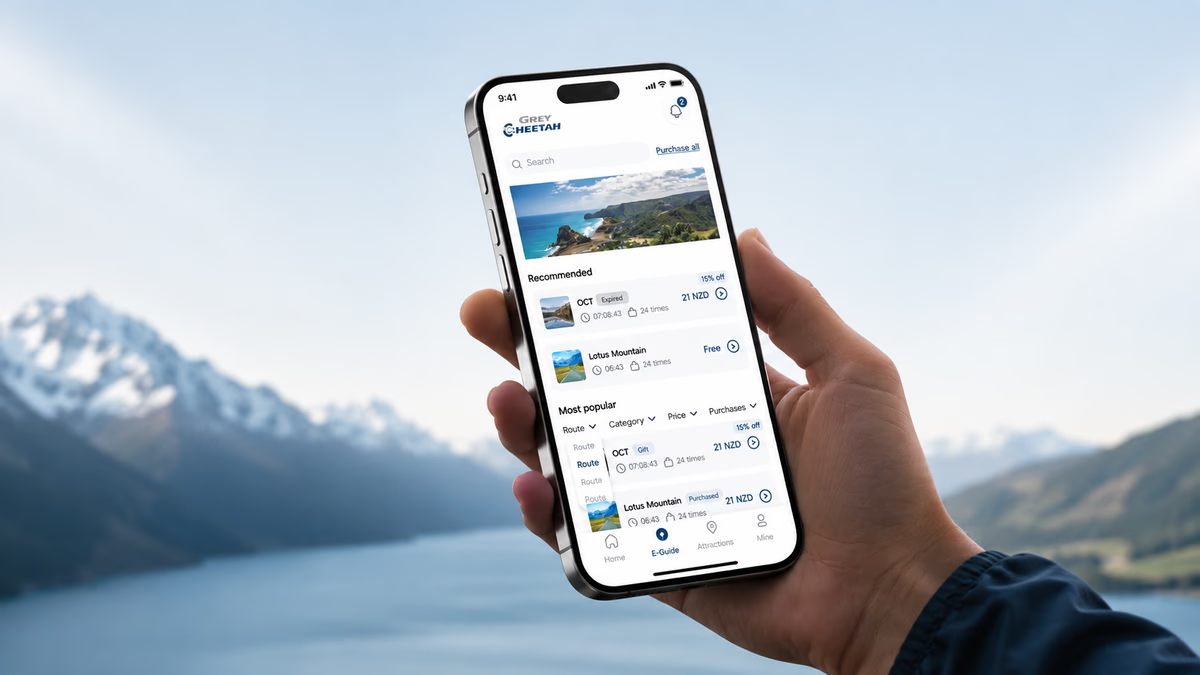
We have built a platform for the Norwegian independent travel market that brings together fjord routes, niche experiences, local guides, and itinerary services. Users can flexibly combine travel plans based on time, interests, and budget, while viewing bookings, rules, and complete itineraries in one place—no need to piece together information across multiple channels.
Independent travelers are shifting from landmark check-ins to more authentic on-the-ground experiences
Traditional travel products are primarily fixed-route, with clear delivery standards, but they struggle to meet users' needs for niche destinations, personal pacing, and distinctive experiences. Norway's natural resources and seasonal experiences are also highly fragmented, making it difficult for many high-quality services to be discovered on major platforms.
We see that users want freedom, but freedom should not mean bearing all the information and fulfillment risks themselves. Therefore, the project must not only solve resource discovery but also complete route combination and service assurance together.
The more flexible the itinerary, the higher the demands on supply chain management
Each experience has its own opening hours, seasonal availability, weather restrictions, group size requirements, and cancellation policies. If users adjust one part of their itinerary at the last minute, it can simultaneously affect transportation, accommodation, and subsequent activities.
Cross-border bookings also involve multilingual descriptions, payments, refunds, and supplier qualifications. The platform cannot simply showcase attractive routes while ignoring whether services can be delivered on time.
Build Travel Freedom on a Manageable Supply Chain
We organize attractions, transportation, guides, and experiences in a modular way, allowing users to freely combine them based on preferences while viewing the complete arrangement in a single order and itinerary page, reducing information fragmentation.
In supply chain management, we uniformly record supplier profiles, opening hours, service rules, cancellation policies, and order responsibilities, so users can clearly see service boundaries before payment, and the platform can easily handle subsequent changes.
In terms of business model, the platform generates revenue through booking commissions, custom route fees, and local value-added services, while helping niche suppliers gain a more stable customer base.
What we solve is the problem of independent travel being "seemingly flexible, but the burden of information gathering and fulfillment risks falls entirely on the user."
Technology is not the goal — exponential business growth is.