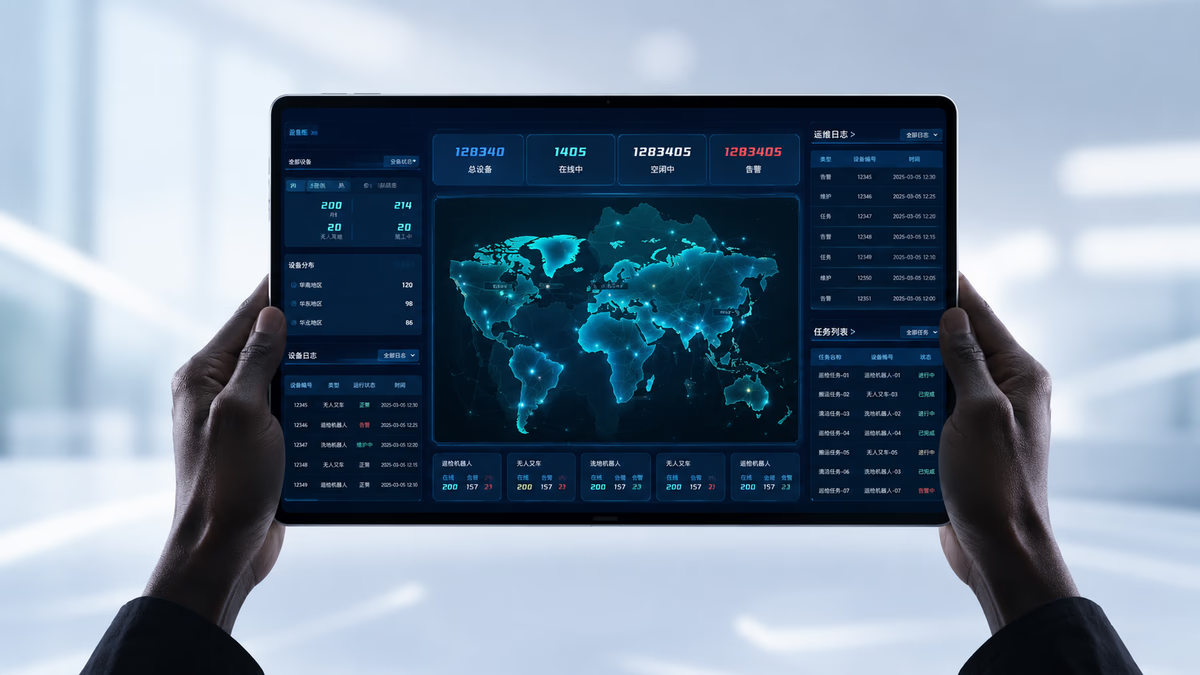
We provide a unified intelligent scheduling system for parks and large commercial spaces, capable of integrating inspection robots, delivery robots, cleaning robots, and other device types. It offers status monitoring, real-time video, remote control, task scheduling, anomaly alerts, and multi-park node management. The system focuses not on whether a single device is intelligent, but on whether the growing fleet of robots can be operated in a unified and secure manner.
As device fleets grow, individual device intelligence does not equal overall intelligence
Different device manufacturers typically have their own control systems. The more devices there are, the more platforms managers need to switch between, and issues such as task conflicts, missed alerts, and operational tracking problems continue to grow.
That is why we did not continue developing around a single type of device. Instead, we built a unified dispatch center that does not rely on any single vendor, allowing different robots to operate within the same operational view.
Heterogeneous device access and remote control security are two coexisting core challenges.
Different robots come with their own protocols, status fields, and control methods. A unified platform must establish a standardized device model while preserving the genuine differences between device types—without sacrificing key capabilities in the name of uniformity.
Remote commands directly impact physical devices, making it essential to strictly govern permissions, command scope, exception handling, and multi-campus networks. A single misstep doesn't just corrupt a data point; it affects the live environment.
Achieve scalable, unified scheduling through device standardization and permission systems
We first establish a unified device profile and status model, then issue commands based on different task scenarios and continuously monitor execution results, enabling multiple types of robots to be viewed, scheduled, and maintained on the same platform.
On the security front, we incorporate role-based permissions, operation logs, anomaly alerts, and command confirmation mechanisms, while retaining relatively independent operation and fault-handling capabilities for multi-campus nodes, reducing risks from unauthorized operations and network anomalies.
In terms of business model, the platform can offer SaaS and deployment services based on device scale, deployment nodes, or functional modules, and also take on subsequent operations and maintenance revenue.
What we solve is not "how to remotely control a single robot," but "how to safely and cost-effectively manage a continuously growing portfolio of robot assets."
Technology is not the goal — exponential business growth is.