Are you developing or about to develop a smart hardware product? It could be an innovative smart home device, a cutting-edge medical wearable, or an efficient industrial IoT terminal. You invest heavily in refining hardware craftsmanship, optimizing components, and pursuing ultimate industrial design. However, when the product hits the market, you may face these dilemmas: stunning features but cumbersome operation, powerful performance but fragmented experience, and once the user's novelty wears off, it becomes a 'dust collector in the drawer.' The root cause often lies not in the hardware itself, but in the 'invisible and intangible' software. In the smart era, hardware sets the lower limit of a product, while software truly determines its upper limit and ceiling.
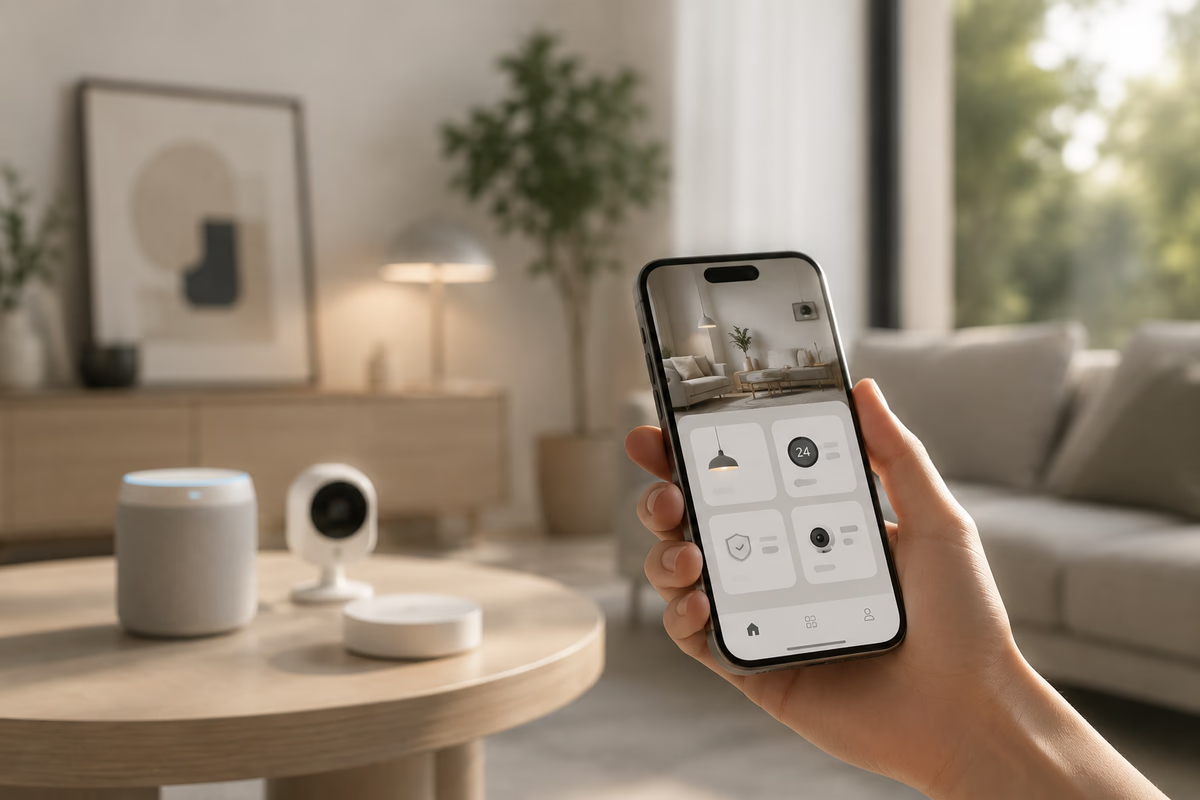
1. Customer Pain Points: How Does Hardware-Software Fragmentation Kill a Good Product?
Many hardware manufacturers fall into the following pitfalls during software development, preventing their products from fully realizing value:
Feature Stacking Rather Than Experience Integration: The app is merely a remote control for hardware functions, with lengthy menus and cumbersome operations. Users cannot feel the intelligence and convenience brought by integrated hardware-software synergy.
Post-hoc Patches Rather Than Integrated Design: Software development is hastily outsourced after hardware development is complete. This results in software that cannot fully leverage hardware performance, frequent bugs, difficult upgrades, and a fragmented experience.
Data Silos Rather Than Value Loops: Massive data collected by hardware is only used for simple display, lacking deep mining and analysis by cloud AI algorithms, failing to generate data value for user insights and product optimization.
Single-Product Thinking Rather Than Ecosystem Vision: The product cannot interact with other smart devices or integrate into mainstream smart ecosystems (e.g., Apple HomeKit, Google Home, Tmall Genie), leaving it isolated and significantly reducing its playability and practicality.
These pain points directly lead to poor user retention, low brand value, difficulty in raising unit prices, and a short product lifecycle.
2. The Solution: Top-Level Design for Integrated Hardware-Software
For a truly smart hardware product, software and hardware must be integrated from the very beginning. They are like the body and brain of a person, working together to create miracles.
Core Value of Integrated Hardware-Software Development:
1. Disruptive User Experience, Building Brand Loyalty
Through software, cleverly define hardware interactions to give the product a unique 'soul' and personality.
Achieve seamless intelligence: Users need no complex setup; the device automatically determines scenarios and provides precise services based on sensor data and AI algorithms (e.g., autonomous adjustment, proactive anomaly alerts). The experience evolves from 'manual control' to 'proactive service.'
2. Unlock Data Value, Innovate Business Models from 'Product' to 'Service'
Hardware becomes a touchpoint for continuous data collection. Through cloud SaaS platforms for big data analysis and AI processing, we provide:
User Insights: Understand user habits to support product iteration and marketing decisions.
Predictive Maintenance: Early warning of hardware failures, transforming 'passive after-sales' into 'proactive care,' greatly enhancing customer satisfaction.
Pioneer new business models like hardware + software subscription services, generating stable recurring revenue and significantly increasing customer lifetime value.
3. Integrate into Ecosystems, Amplify Product Momentum
Through software development, seamlessly connect your product to major domestic and international smart ecosystems, gaining instant exposure and traffic from billion-user platforms, dramatically reducing market education costs.
By opening APIs, attract third-party developers to create new features and playstyles for your product, co-building a product ecosystem and forming network effects.
4. Build Long-Term Technical Barriers
Deeply customized hardware-software integration, with code, algorithms, and hardware highly coupled, makes it extremely difficult for competitors to copy or reverse-engineer, forming a solid technical moat.
3. GeekDance: Your Integrated Hardware-Software Solution Partner
We understand that successful integrated products require crossing multiple technical gaps: hardware, embedded systems, cloud platforms, mobile apps, and AI. GeekDance provides full-stack capabilities to help you perfectly realize your vision.
1. Collaborative Design Throughout: Our software engineers get involved from the product definition stage, working alongside the hardware team to ensure software thinking is embedded in hardware design, guaranteeing experience consistency from the source.
2. Full-Stack Technical Implementation:
Embedded Development: Build efficient, stable firmware to precisely control hardware.
Mobile App Development: Develop iOS/Android apps with excellent user experience, or cross-platform solutions.
Cloud Platform Construction: Build scalable, highly available cloud services for device connectivity, data storage, and intelligent analysis.
AI Integration: Infuse your product with AI capabilities such as image recognition, voice interaction, and predictive algorithms.
Ecosystem Integration and Certification Support: Extensive experience integrating with mainstream ecosystems (e.g., Mi Home, Google Home) to assist you with technical integration and compliance certification, quickly entering the ecosystem.
Project Management and Quality Assurance: Adopt rigorous project management processes to ensure complex projects are delivered on time and with quality, along with ongoing testing and operational support.
Choosing GeekDance means you gain not just a software team, but a technical partner deeply involved in product creation, sharing market risks. We are committed to using the power of software to make your hardware product shine, winning long-term favor from the market and users.
Technology is not the goal — exponential business growth is.